



What is Python?
Python, open-source coding structure, dynamically interpreted with dynamic semantics, object-oriented, and is a high-level programming language. Its extremely dynamic nature and integrated, high-level built-in data structures make this language very attractive in the software world for quickly developing applications and using it as a scripting or glue language to connect different software components.
Its easy-to-learn and easy-to-apply structure, much like a daily spoken language, has made Python one of the most popular languages today. The fact that this language can be easily learned and applied by everyone is preferred by many organizations and companies because it reduces program maintenance costs.
Thanks to its “open-source” coding structure, Python can work modularly integrated with many different software architectures and can be easily learned and used by everyone with “free” learning materials.
Why Should You Learn Python?
We know why Python is so popular, but why should you learn to use Python? In addition to the aforementioned ease of use and versatility, there are many reasons to learn Python:
- Python Developers are in Demand: There is a demand for those with Python skills in a wide range of fields. If you want to start or change your career in this area, it could be a vital skill to help you.
- Good Career: Recent statistics show that the average annual salary for those with Python skills is around £65,000 in the UK.
- Increasing Job Opportunities: Considering that Python can be used in many emerging technologies such as artificial intelligence, machine learning, and data analytics, it is likely to be a skill that is ready for the future. Learning Python now can benefit your career throughout.
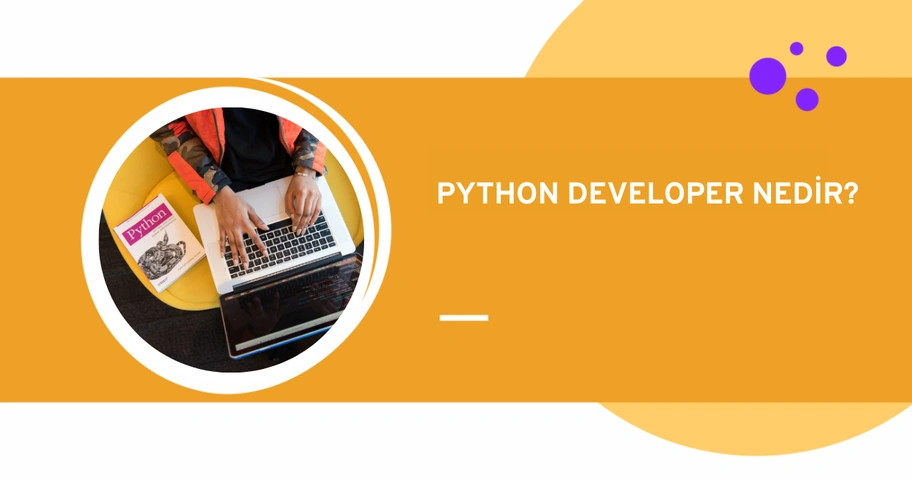
What is a Python Developer?

Python developer is involved in supporting frontend developers in server components, application integrations with third-party web services, and web applications. They are responsible for writing backend components to ensure that every application is compatible with third-party services.
A Python developer can work as a web developer, data analyst, or software engineer. They oversee the flow of information between servers and users. They can compress data, write web application backends, and automate scripts.
Python is increasingly in demand, primarily for its simplicity and features in the field of data science. Developers use Python for machine learning (ML), artificial intelligence (AI), web development, academic research, and even scientific computing.
What Does a Python Developer Do?
A Python developer has a wide range of roles and responsibilities. Since Python has a broad range of applications, the role and responsibilities of a Python Developer tend to be similarly extensive. Here are some of the responsibilities and tasks of a Python Developer:
- ✅ Collecting data and analytics to develop insights for decision-makers
- ✅ Creating new tools for websites
- ✅ Developing programs for repetitive tasks
- ✅ Developing scripts for deployment
- ✅ Cleaning and transferring data
- ✅ Ensuring data protection
- ✅ Creating software that meets the needs of businesses or individuals
- ✅ Using Python libraries to process large data sets, perform data analysis, and visualize results
- ✅ Building web applications using web libraries like Django or Flask
What Skills Should a Python Developer Have?

Although specific responsibilities may vary, some of the fundamental skills needed to be a Python developer are as follows:
Skills
A Python developer must have technical skills to smoothly manage the flow of information between a company's server and end users. They should have working knowledge of HTML, SQL, CSS, Java, and .NET.
Python Libraries
Libraries make a developer's life easier, streamline the team's workflow, and make task execution much faster. One of Python's most important features is its large number of libraries. A Python developer should be knowledgeable about existing libraries. If you're curious about the most popular Python libraries, you can read our article.
Python Frameworks
Frameworks accelerate the application development process by offering developers many ready-made structures and tools. By using a framework, you can use ready-made components and modules instead of starting from scratch. There are many popular web frameworks used in the Python programming language.
Python web frameworks can be chosen according to different needs and projects. Each has different features and can be selected to suit the needs of developers. These frameworks greatly assist Python developers in their work. To learn about frameworks like Django, Flask, CherryPy, web2py, and TurboGears, you can read our article.
ORM Libraries
There are several popular libraries in Python known as ORM (Object-Relational Mapping). ORM libraries combine object-oriented programming with database operations to perform database tasks more easily and efficiently. Having ORM libraries in a Python developer's skill set is a great advantage.
Communication Skills
A developer's job isn't just to write lines of code. Whether it's completing a project, creating a new application, or perhaps helping a startup rapidly grow, you need to work harmoniously with the team.
How Long Does it Take to Learn Python?
Generally, learning the basics of Python takes about two to six months. However, you can learn enough to write your first simple program in just a few minutes. However, becoming proficient in Python's various libraries can take months or even years.
How long it takes you to learn Python depends on various factors such as how much Python you need to know to achieve your desired goals. For example, if you want to learn enough Python to automate a specific task at work, you may achieve this faster than if you want to learn enough Python to find a job as a data analyst. Some other factors that could affect how long it takes you to learn Python include:
- ⌛ Previous Programming Experience: If you have written code before, you can learn Python faster.
- ⌛ Learning Approach: Structured courses aligned with your goals can accelerate your learning.
- ⌛ Time Dedicated to Learning: The most important thing is how much time you dedicate to learning and practicing Python. If you practice a bit every day, you can learn much faster.
What are the Career Opportunities of the Python Language?

Professionals proficient in the Python programming language can easily open the doors to an excellent career in both large and small companies in our country and the world with the titles listed below:
- Software Engineer
- Python Developer
- Research Analyst
- Data Analyst
- Data Scientist
- Software Developer
If you also fit one of these profiles, all you need to do to achieve your dream career is to create your profile on Coderspace and wait for us to find the perfect opportunity for you! just create your profile by clicking here in 2 minutes and lean back, let us handle the rest. :)
How to Become a Python Developer?
In our age where even Git is moving to the “remote” education model, i.e., learning from a distance, it is becoming normal to take remote classes to learn programming languages. Below, we have listed three platforms where you can learn the Python language:
- Udemy: Generally not free, but an incredible price/performance ratio.
- Coursera: Its price might be a bit steep against the Turkish lira, but the certificates you will receive from the world's best universities and institutions can turn into the most profitable investment that will contribute to your career.
- Datacamp: A practice-oriented, highly interactive learning application. It's paid, but not expensive. Worth trying :)
Additionally, we mentioned that Python is a free and open-source language. Therefore, you can also access all documentation for free by clicking here to reach it from their official sites.
Conclusion: Learn Python
The Python programming language is one of the simplest and most popular languages you can learn today. Regardless of your industry, you can find a Python use case for yourself digitally. Even if you haven't found any area, mastering at least one programming language will enhance your analytical intelligence skills to the next level and make you better than you are.
Just like learning a new language or instrument, learning a programming language will give you the ability to look at problems from different perspectives and will improve the way you think.
You can also check out another article we wrote to learn more about Python: Why Python and Who is Python For?
Further reading and additional resources: