




Rust; security, speed and concurrency focused modern system programming language. It enables developers to write safe and efficient code.
C and C++'s performance while helping to prevent the memory safety and thread safety issues that these languages frequently encounter. Rust ensures memory safety at compile time with unique features such as ownership, borrowing, and lifetimes. This significantly reduces runtime errors.
Rust is an open-source language supported by a strong community. According to the 2023 Stack Overflow survey, it has become the most loved programming language among developers. 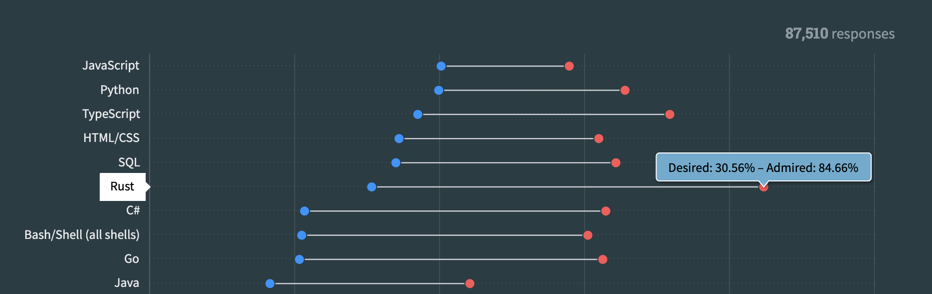
What is Rust Used For?
Rust ensures the development of high-performance services while guaranteeing memory and thread safety. This allows developers to catch errors at compile time.
Rust is most commonly used in the following areas:
- ✅ Backend systems
- ✅ Operating system development
- ✅ Server-side web development
- ✅ Blockchain infrastructure
- ✅ Command-line tools
- ✅ Embedded systems and IoT development
Application Types that Can Be Written with Rust
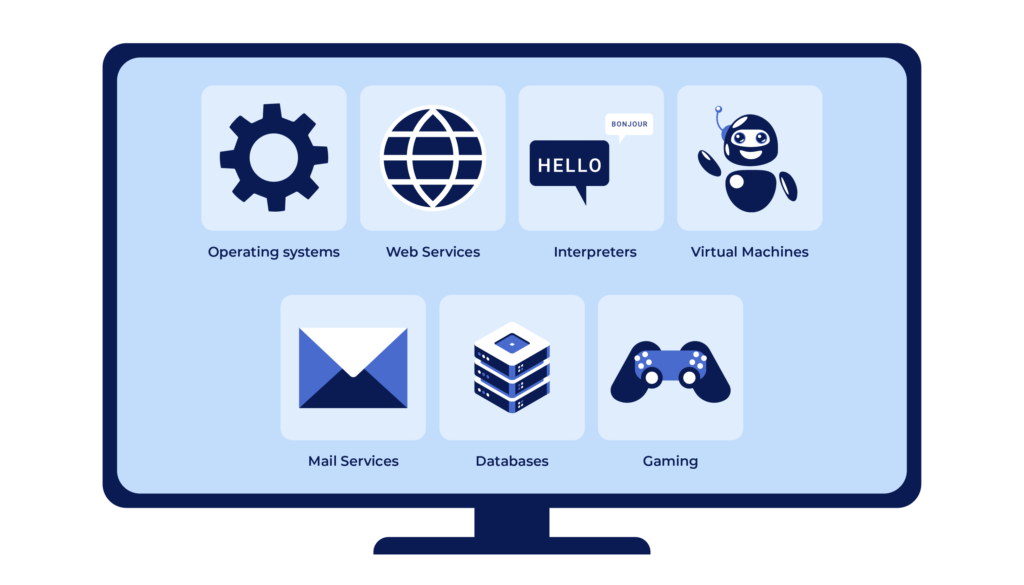
The Rust programming language has a wide range of applications, from game development to building backend systems for data science. With a combination of speed, simplicity, and security, it enables the creation of highly performant applications. Here are the top 5 areas where the Rust programming language is most commonly used:
1. System Programming
Rust is suitable for developing low-level system software such as operating systems, device drivers, embedded systems, and network services. It has especially become a popular choice for system programming aimed at developing operating systems. In an era where cyber attacks are becoming increasingly common, it is vital for operating systems to be as secure as possible. Therefore, many system programmers are turning to Rust due to the Rust programming language's impressive level of memory safety. Rust's backward compatibility and relatively fast runtimes make it an attractive choice for system programmers.
2. Web Development
Rust is a versatile programming language known for its high performance and security. Therefore, it is not surprising that many people use it for web development.
It not only stands out for being free of bugs, but also for its ability to achieve better runtime performance and lower latency. The fact that Rust does not rely on a garbage collector is another reason why developers prefer Rust.
JavaScript and Python are other established languages more closely associated with web development, but Rust has the potential to become the preferred programming language for developers in the future.
3. Network Programming
Due to its memory safety and concurrency features, Rust is an ideal programming language for network programming. The language's Tokio software library offers a set of useful tools that developers can use to build secure, efficient, and scalable network applications. Rust can be used for various network programming-related tasks, including asynchronous networking, HTTP client and server development, and network protocol development.
4. Data Science
Although Rust is not as widely used as languages like Python or R, it has libraries and frameworks that provide data analysis and manipulation capabilities. Libraries such as Ndarray, rustlearn, and Polars offer functionality for working with numerical data, machine learning, and data processing tasks.
5. Game Development
Although many game developers typically prefer programming languages like C# and C++, Rust is quickly becoming an option. Its fast runtimes and efficiency make it excellent for developing games through game engines like Piston and Amethyst Engine.
Since Rust has many similarities with C++, it makes it easier for developers to learn it. Game engine creation, implementing game logic, and cross-platform development are just a few of the areas where Rust can be used in game development.
Why Rust Language?
- 1️⃣ Security: Rust's ownership model and static type system enable safer software development by preventing memory errors and null pointer dereferences.
- 2️⃣ Concurrency: Rust's concurrency model provides safe and efficient concurrent programming. This allows better utilization of modern hardware.
- 3️⃣ Developer Productivity: Rust's easy syntax, modern tools, and comprehensive documentation improve developer productivity and code maintenance.
Advantages and Disadvantages of Rust
✅ Advantages:
- Memory Safety: Rust prevents memory-related errors by enforcing strict compile-time checks. These include null pointer dereferences, buffer overflows, and data races.
- Concurrency: Rust's ownership system and lightweight threads (known as "async") make writing concurrent and parallel code easier.
- Performance: Rust provides fine-tuned control over memory allocation and low-level optimization techniques, allowing developers to write high-performance code.
- Cross-platform compatibility: Rust can target different platforms. It allows writing code that can run on different operating systems.
- Community and ecosystem: Rust has a vibrant and growing community that actively contributes to libraries, frameworks, and tools. This makes developing applications in various areas easier.
👎 Disadvantages:
- Steep Learning Curve: Rust has a unique syntax and concepts. Understanding and using these concepts correctly can be challenging initially.
- Compilation Time: Rust's strong emphasis on safety and performance can lead to longer compilation times compared to other languages.
- Smaller Ecosystem: Although Rust's ecosystem is rapidly growing, it may still be smaller compared to more established languages like Python or JavaScript. Finding specific libraries or tools for niche use cases may require more effort.
Rust Tools
- Cargo: Cargo is Rust's package manager and build system that simplifies dependency management, compilation, testing, and documentation generation.
- rustc: rustc is the Rust compiler that converts Rust code into executable binaries.
- rustfmt: rustfmt is a code formatter for Rust. It ensures consistent and readable code formatting.
- clippy: clippy is a tool that provides suggestions to improve code quality and ensure adherence to best practices.
- rustdoc: rustdoc is Rust's built-in documentation generator that allows developers to effectively document their code.
Rust Libraries and Frameworks
- Actix: Actix is a powerful and high-performance framework for building concurrent, scalable, and efficient applications.
- Rocket: Rocket is a web framework that emphasizes simplicity, safety, and speed.
- Tokio: Tokio is a library that provides an asynchronous runtime for Rust and forms the foundation for building scalable network applications.
- Diesel: Diesel is a safe and efficient ORM (Object-Relational Mapping) library for interacting with databases in Rust.
Resources to Learn Rust
There are many resources available to learn Rust. Here are some key resources to get started:
📕 The Rust Programming Language (Official Rust Book): This book, available for free on Rust's official website, is the most comprehensive resource for learning the Rust programming language. It covers everything step by step, from beginner to advanced levels.
💻 Rust By Example: An excellent resource for those who want to learn Rust through practical examples. It provides a good way to understand how Rust works through code examples and apply them to your own projects.
👩💻 Rustlings: A GitHub project aimed at learning Rust through small exercises. It is a great way to learn the basics of Rust and practice.
📺 Rust Educational Channels on YouTube: You can find video tutorials from knowledgeable individuals on Rust, such as Jon Gjengset and Ryan Levick, or search for "Rust Programming Tutorial" keywords to find video lessons from beginner to advanced levels.
👾 Rust Lang Discord and Zulip Chat: These are active platforms where you can communicate with the Rust community and ask questions about Rust.
Rust Programming Language Example
To run Rust, you first need to install Rust on Windows and then create a main.rs file. Once you open the file, you need to enter the following code:
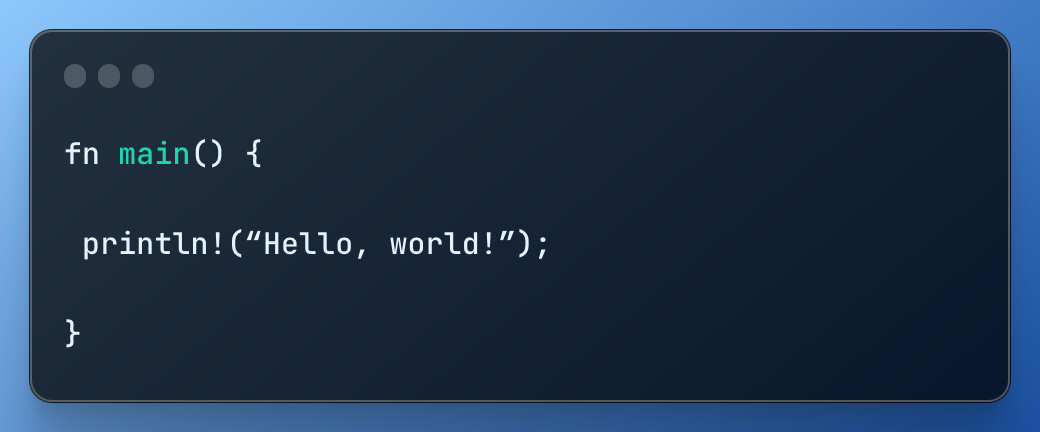
Then, you need to enter the following command in Windows.
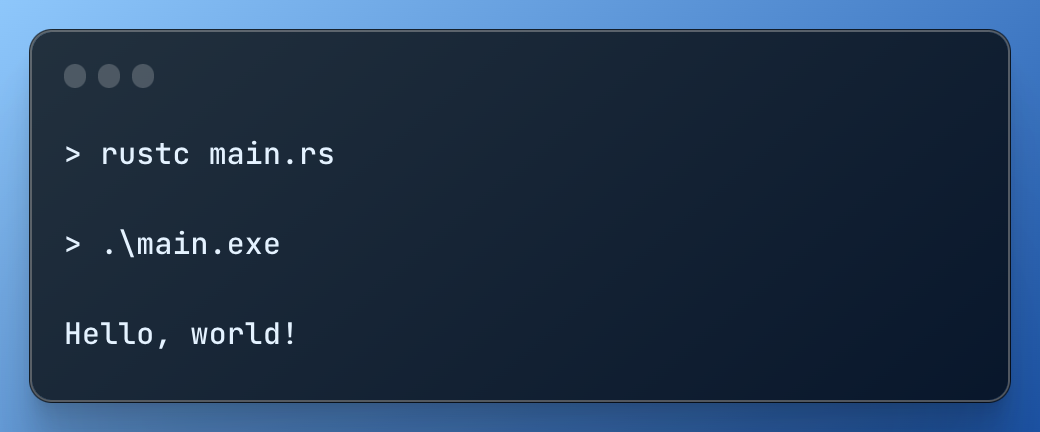
Rust Career
Rust is now increasingly being used in web development as well. It is used to write APIs and backend components, and its impact on programming languages seems likely to grow.
Starting to learn Rust today could be one of the best investments you can make for your career. If you want to pursue a career with Rust, you can follow the steps below:
- 🎓 Learn Rust: Gain proficiency in the Rust programming language with the resources mentioned above. Additionally, you can check out our free Rust bootcamps to start learning Rust.
- 🎯 Develop Projects: Practice by developing your own Rust projects and share them on platforms like GitHub.
- 🤝 Join the Community: By joining the Rust community, you can build your network and stay updated with industry developments. You can check out our programming developer Discord channel.