



1. What is Opensource?
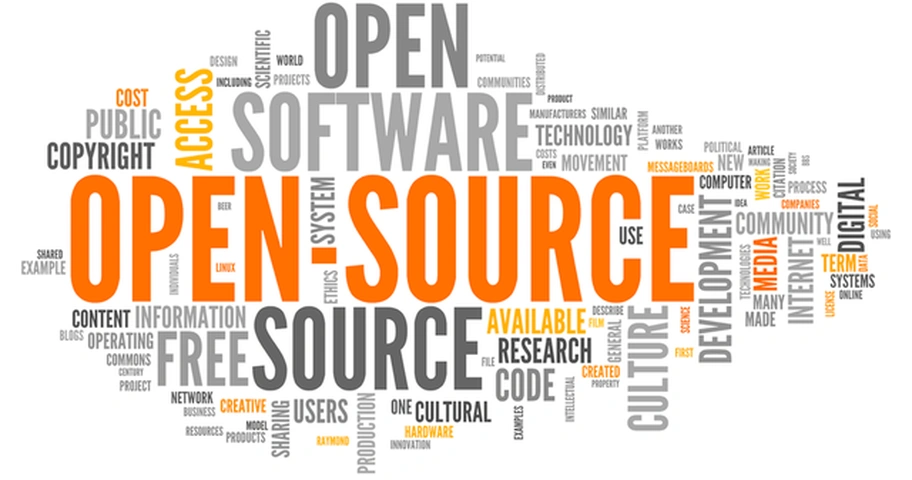
Opensource, meaning open data, is a collaborative movement focused on sharing, existing, and using. If you are interested and knowledgeable, you can also access how the data is used at the core of a working program, if you want, you can try to develop it, or you can also benefit yourself for a similar application. In other words, open data means having the freedom to use a product that belongs to a large community (opensource community) as much as you want in a way that suits its purpose. This freedom forms the general philosophy of open data.

2. What is the starting point of Opensource and why is it important?
The idea of sharing health, administrative, and social science data has been influential in its emergence. It has been believed that such data being subject to various restrictions and protections hinders sharing, and on the contrary, that sharing them would bring benefits. Later on, with the current millennium era, the reasons and frameworks have been widely discussed. As a result, these discussions have led to various conferences and academic papers. The importance of open data is related to it being both accessible and modifiable. In other words, increasing access in a context triggers increased development, and developmental activities take place driven by access. The value of open data lies within this philosophy. At this point, if we talk a little more about the benefits of open data, we can focus on creating broad participation potential, providing opportunities for openness to development, supporting innovation and thus increasing efficiency.
3. Opensource Existence and Potential
Open data is a trend of today's data era and the foundational value of the culture of collaborative development. In this context, there is a considerable shift towards open data even in government data. These rates have risen above 10 percent today. This increasingly daily trend can be easily managed with various organizations over the internet. If these data are processed correctly, they can provide an excellent opportunity for research and development, which can lead to developments in the field of social sciences. Additionally, these data can be reused repeatedly or redistributed repeatedly as needed, thus allowing different research projects to use the same data needs by saving time. Additionally, the advantage of fostering a collaborative culture can make it possible to produce joint results and utilize different business connections in the same context. By providing equal usage opportunities regardless of the different conditions of different groups structurally, it is potentially inclined to eliminate all commercial access agreements at its core.
4. Opensource Existence and Principles
-
Free and continuous access
-
Reuse and sharing
-
Developable and innovation-focused
-
Being inclusive and transparent
-
Up-to-dateness and processability
-
Standardization/Determining Norms
5. Comparison of Opensource and Closed Source
Closed source approaches, meaning closed data, are approaches where you cannot access, see, or change a product's source code. In today's data world, the vast majority of applications operate using a closed data approach, but alternatives with open data approaches are not nonexistent. For example, if you are looking for an open data source-coded application for your office program needs, LibreOffice will be a good alternative to the closed source Microsoft Office. We can easily replicate these examples; for instance, if you are looking for a good open data example instead of the closed source Google Chrome, which is a proprietary software for your web browser, Firefox will easily meet your needs. Are you looking for a text editor? Notepad++ is an open data alternative. Need a media player? VLC player is working great, isn't it? It's worth dedicating the most crucial point to the operating system; the massive Linux and its derivatives should not be mentioned in just one sentence, I think. I will address it in relatively more detail at the end of our article.
6. How can I make my product open data?
There are several steps to making your product open data, which we can summarize as follows:
Decide on the subheadings for which you plan to share the source code and categorize your data with an open license, define your own norms regarding usage rights, and complete this process. After deciding the scope, also license it and finalize the process after brainstorming on your norms. However, if you require, you can also opt for a method similar to providing an API to offer partial usage of your product as open data.
7. Linux: One of the Most Successful Opensource Examples

I have allocated this part of the article to Linux, perhaps one of the most successful examples of open data. Linux is the best-known and most widely used open data operating system base. Like its other similar counterparts, it has a graphical interface and uses similar software. But Linux is actually very different by being open data, so the source codes that make it up can be viewed for free, edited according to the user's ability, and thus contributions can be made to the product. Therefore, Linux can get better every day with active participation. Does this kind of complexity make sense, when you hear something like "Who owns this operating system, anyway?" I can almost hear you say. There are different Linux-based operating system variations; some have formed different communities and serve different purposes, but there is no actual ownership. With open data licensing, only the founders of the Linux variation operating systems are known, and certain access rights are defined in Linux kernel communication for users. And this development is supported and professionally maintained by a specific non-profit organization with the GNU philosophy. It is the Free Software Foundation.
8. Companies Supporting Opensource
For some companies supporting open data, such a list can be prepared:
-
Oracle
-
Docker
-
Facebook
-
Netflix
-
Github
-
Google
-
IBM
-
Huawei
-
MongoDB
And furthermore, more can be added to this list.